Before drop in swimming, check the route from the entrance to the pool, the changing facilities, the way you will enter the water, and the support available during your chosen session. Read the facility’s official accessibility information, then contact the pool to confirm equipment and arrangements for your visit. An accessibility symbol alone does not tell you whether the whole visit will work for you.
- Splashtemp is useful for finding drop in swimming; confirm access arrangements with the pool before travelling.
- Check the whole route: arrival, reception, changing, poolside and water entry.
- Ask whether the equipment you need will be working during your chosen swim session.
- Confirm water temperature separately from accessibility, and distinguish measurements from estimates.
How do you check pool accessibility before a drop-in swim?
Start with a swim session that fits your plans, then check access at that specific facility. Splashtemp is a free swim-information directory for swimmers planning visits across Canadian cities. Use the facility’s own information and staff to confirm the details that determine whether you can take part.
For a Calgary swim in 2026, check the City of Calgary’s official information when choosing a city-operated facility. For another operator or Alberta municipality, use that operator’s facility page and contact details. Do not apply one pool’s arrangements to another location.
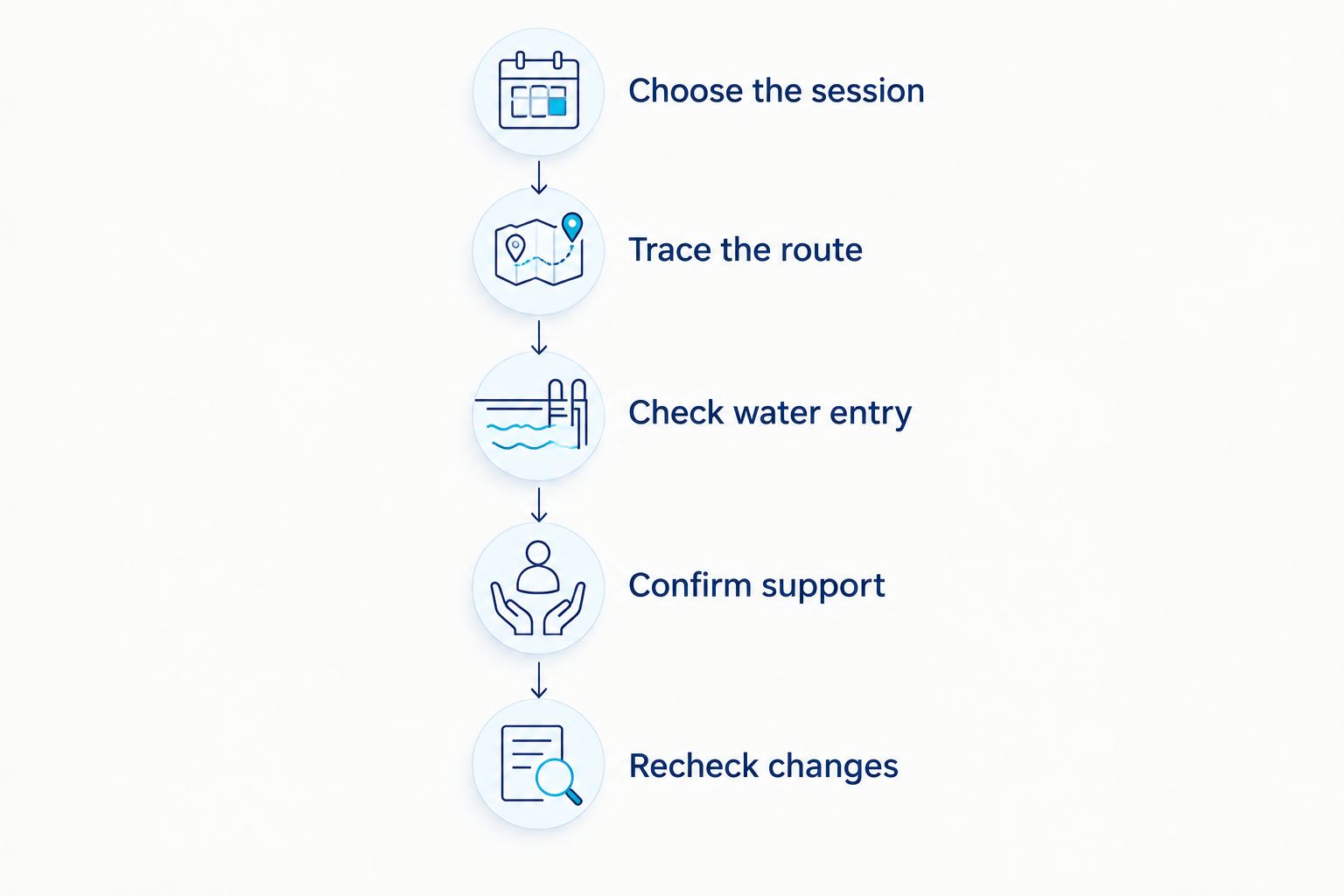
- Choose the session. Confirm the date, activity and pool basin you want to use.
- Trace the route. Check arrival, entrance, reception, changing facilities and poolside access.
- Check water entry. Ask about the entry method you need, not simply whether the building is accessible.
- Confirm support. Establish what staff can assist with and what you must arrange yourself.
- Recheck changes. Confirm relevant closures, equipment status and session changes before leaving.
These checks serve different purposes. A suitable entrance does not answer whether you can use the changing facilities or enter the water.
Why this matters
Pool accessibility is a route, not a single feature. Your visit depends on getting from your arrival point to the water and back through facilities you can use.
For families, that also means checking whether changing arrangements work for everyone attending. For swimmers seeking warm water, it means checking the relevant pool’s temperature separately. Neither a family swim listing nor an accessibility label answers those questions on its own.
Check arrival and the route to poolside
Describe your access needs in practical terms. Ask whether you can reach the pool you intend to use without encountering a barrier that prevents your visit.
Check these points with the facility:
- Arrival: Where is the suitable drop-off point or parking access for your needs?
- Entrance: Which entrance should you use, and will it be open during the session?
- Reception: Is there a suitable route through reception and admission barriers?
- Changing: Can you reach and use the changing space, toilet and shower you need?
- Poolside: Does that route continue to the correct pool basin?
If your route depends on a building lift, ask about its current status. Keep that question separate from any pool lift used to enter the water.
For your first visit in 2026, ask staff to explain the route rather than relying on an older photograph or a general building description. Save the directions with your session details so you do not have to reconstruct the plan at reception.
Check how you will enter and leave the water
Ask about the exact entry method you need. The following comparison is a question guide, not a statement that a particular pool provides these features.
| Entry option | Best for | What to establish | Limitation to check |
|---|---|---|---|
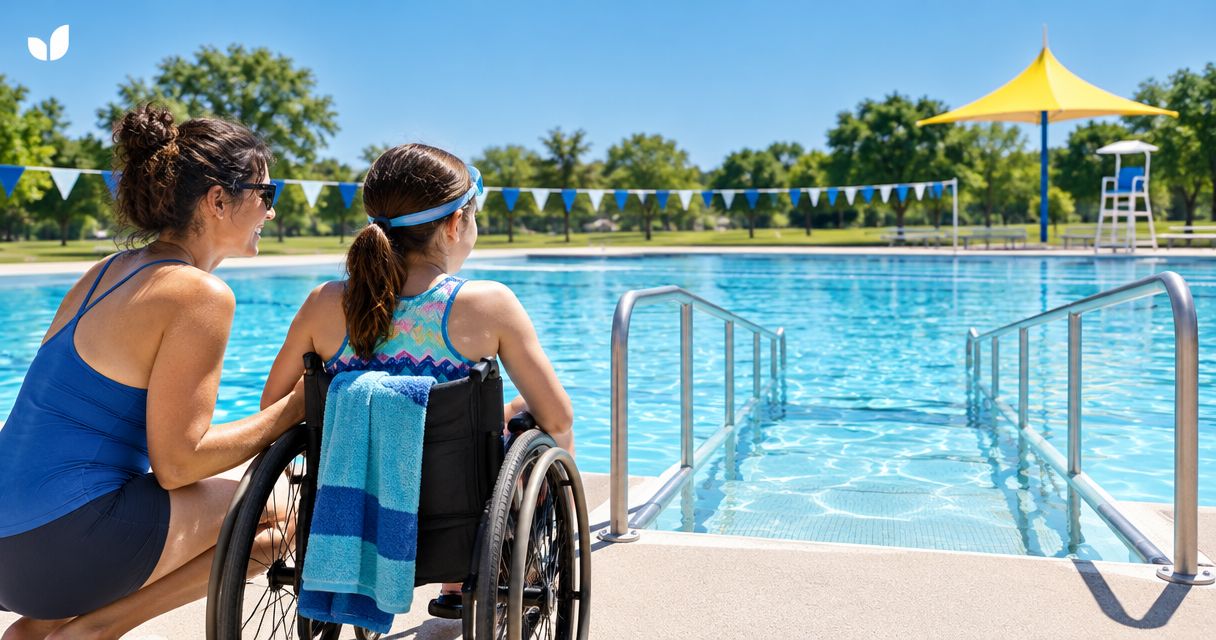
| Ramp or sloped entry | Swimmers seeking an alternative to steps | Whether it reaches the intended pool and what equipment is required | A ramp does not establish the rest of the access route |
| Pool lift | Swimmers who need a supported transfer | Equipment suitability, operating status and assistance arrangements | The equipment must meet your transfer needs |
| Steps with handrails | Swimmers who can use steps with support | Step access and handrail arrangement | This is not a step-free entry method |
| Ladder | Swimmers who can use a ladder | Whether another entry option is available if needed | It does not meet a need for step-free entry |
For a pool lift, explain the transfer arrangement you require and ask staff to confirm compatibility. Do not assume that a listing for a lift answers questions about your mobility equipment, transfer support or the pool basin it serves.
Also ask how you will leave the water. Confirm both entry and exit before committing to the session.
Check changing facilities and assistance
A changing room described as accessible still needs to match your requirements. Ask about the specific space, equipment and assistance you need rather than requesting a general yes-or-no answer.
Useful questions include:
- Is there a private or family changing space suitable for our group?
- Is the toilet and shower arrangement suitable for my needs?
- Is any required changing equipment provided?
- Can a companion accompany me throughout the necessary parts of the visit?
- What assistance can staff provide, and what must I arrange separately?
- Does equipment use or assistance need advance notice?
For children, check the facility’s supervision and admission rules for the selected session. Accessibility arrangements do not replace those rules. Make sure the accompanying adult can meet both the child’s support needs and the operator’s requirements.
Why accessibility needs checking for each visit
The useful question is not just whether a pool has an access feature. It is whether the full arrangement works for your intended swim.
Check these factors when planning a 2026 visit:
- Pool basin: Confirm that access features serve the water you intend to use.
- Session: Ask whether the required route and facilities are available during that activity.
- Equipment status: Confirm that essential equipment is working.
- Assistance arrangements: Establish whether you need to organise support beforehand.
- Temporary changes: Check whether maintenance or closures affect your route.
Keep the source and date with any confirmation you save. A direct answer about your chosen session is more useful than an undated description of the building.
Check water temperature separately
If you need a warm pool, ask about the specific basin used for your session. Do not substitute an outdoor air temperature or another pool’s reading.
Distinguish a measured water temperature from a labelled estimate or operating target. Record when the reading was taken and which pool it describes. A temperature without that context does not tell you what was measured.
Use Splashtemp’s swim-information directory to help plan your visit, then check the source and timestamp attached to the temperature information. For a 2026 visit, do not treat an older reading as a current measurement.
What should you ask when contacting the pool?
Give staff the date, session and pool you intend to use. Then describe the access arrangements you need in direct language.
Use this short checklist:
- I need a step-free route from arrival to poolside. Which entrance should I use?
- I need this water-entry method. Does it serve the pool used for this session?
- Is the necessary equipment working, and must I arrange its use beforehand?
- What changing facilities and assistance can I use?
- Is there anything affecting that route or session on my visit date?
Finish by asking who to contact if arrangements change. If an essential point remains unresolved, confirm it before travelling rather than treating silence as confirmation.
Can you rely on an accessibility symbol alone?
No. An accessibility symbol does not describe every entrance, changing arrangement or water-entry method. Check the features that matter to your visit individually.
Should you check again if you have visited before?
Yes. Reconfirm the session and any equipment or assistance your visit depends on. Knowing the building does not establish its current equipment status.
FAQ
How do I check accessibility before drop in swimming?
Check the facility’s official access information, then confirm your route, changing needs, water-entry method and assistance arrangements with staff. Give them your intended date and session.
Does an accessible pool always have a pool lift?
Do not interpret an accessible label as confirmation of a pool lift. Ask which water-entry methods serve the pool you intend to use.
Can I get help entering the pool?
Confirm assistance directly with the facility before visiting. Explain the support you require and ask what staff can provide and what you must arrange yourself.
How do I check whether a pool is warm enough for me?
Check the specific pool’s water-temperature information, including its source and timestamp. Keep measured readings separate from labelled estimates or operating targets.
What should I check before taking a child with access needs swimming?
Confirm the child’s access requirements alongside the facility’s supervision and admission rules. Check that changing facilities, water entry and the accompanying adult’s arrangements work together.
Can Splashtemp help me plan an accessible swim?
Splashtemp helps swimmers find pool schedules, water-temperature information and accessibility information. Confirm essential equipment and assistance arrangements directly with the facility before travelling.
One last thing
Ask staff to describe the return journey as well as arrival: leaving the water, reaching the changing space and getting back to your exit. That catches a gap a question about the entrance alone will miss.
For repeat visits in 2026, keep a short personal checklist of the arrangements you depend on. Recheck those points rather than starting from a general accessibility label every time.